Thinking about investing in CRM software but unsure what it’ll cost? You’re not alone. The CRM software cost can range from free to tens of thousands per month—depending on your needs, business size, and features. Let’s break down exactly what you’re paying for.


Understanding CRM Software Cost: What You’re Really Paying For

When evaluating CRM software cost, it’s essential to look beyond the sticker price. CRM systems are not just tools for storing customer data—they’re strategic platforms that influence sales, marketing, customer service, and even product development. The cost reflects the value they bring in streamlining operations, improving customer retention, and boosting revenue.
Core Components That Influence CRM Pricing
The price of a CRM isn’t arbitrary. It’s built on several foundational elements that determine how much you’ll pay. Understanding these components helps demystify the pricing models you’ll encounter.
- User-based pricing: Most CRM platforms charge per user per month. The more team members using the system, the higher the monthly bill.
- Feature tiers: Vendors often segment their offerings into Basic, Professional, and Enterprise plans, each unlocking more advanced tools like automation, analytics, or AI.
- Deployment type: Cloud-based (SaaS) CRMs usually have lower upfront costs than on-premise solutions, which require hardware, installation, and IT support.
Hidden Costs Often Overlooked in CRM Software Cost
Many businesses budget for the monthly subscription but forget about additional expenses that can significantly inflate the total cost of ownership (TCO).
- Implementation fees: Some vendors charge for onboarding, data migration, and initial setup, especially for enterprise clients.
- Training and support: While basic support may be included, premium training or 24/7 support often comes at an extra cost.
- Integration costs: Connecting your CRM to existing tools (like email, ERP, or e-commerce platforms) may require third-party middleware or developer time.
“The true CRM software cost isn’t just the monthly fee—it’s the sum of subscription, training, integration, and opportunity cost of poor adoption.” — Gartner Research, 2023
CRM Software Cost by Deployment Type: Cloud vs On-Premise
One of the biggest decisions affecting CRM software cost is whether to go with a cloud-based (SaaS) or on-premise solution. Each has distinct financial implications.
Cloud-Based CRM: Lower Upfront, Recurring Monthly Fees
Cloud CRM systems like Salesforce, HubSpot, and Zoho CRM dominate the market due to their scalability and ease of use.
- Typical pricing: $12–$300 per user per month.
- No hardware costs—vendors manage servers and updates.
- Scalable: Add or remove users easily as your team grows.
- Automatic updates ensure you always have the latest features.
However, over time, recurring fees can surpass the cost of an on-premise system, especially for large teams.
On-Premise CRM: High Initial Investment, Long-Term Control
On-premise CRM solutions like Microsoft Dynamics 365 (when self-hosted) or legacy systems require significant upfront investment but offer more control.
- Initial costs: $50,000–$200,000+ for licensing, hardware, and installation.
- Ongoing costs: IT staff, server maintenance, and periodic upgrades.
- Best for: Large enterprises with strict data security requirements or industries like finance and healthcare.
- Long-term savings possible if the system is used for 5+ years.
Despite the control, on-premise CRMs are declining in popularity due to the complexity and cost of maintenance.
CRM Software Cost by Business Size: Small, Medium, and Enterprise
The size of your business dramatically affects which CRM you can afford and which one makes financial sense.
Small Businesses: Affordable Entry-Level CRM Solutions
For small businesses, the priority is affordability and ease of use. Many vendors offer free or low-cost plans tailored to startups and solopreneurs.
- Free CRM options: HubSpot CRM, Zoho CRM (free for up to 3 users).
- Paid plans: $10–$50 per user/month (e.g., Freshsales, Insightly).
- Key features: Contact management, email tracking, basic automation.
These tools help small teams stay organized without breaking the bank. However, they may lack advanced reporting or customization.
Medium-Sized Businesses: Balancing Features and Budget
As companies grow, they need more robust automation, integrations, and analytics—pushing them toward mid-tier CRM software cost ranges.
- Typical cost: $50–$150 per user/month.
- Popular choices: Salesforce Sales Cloud, HubSpot Professional, Zoho CRM Plus.
- Features: Workflow automation, lead scoring, multi-channel support, API access.
At this stage, businesses often invest in CRM training and dedicated admin roles to maximize ROI.
Enterprise-Level CRM: High Cost, High Reward
Large organizations require scalable, secure, and highly customizable CRM platforms—often at a steep price.
- Cost: $300+ per user/month or custom enterprise quotes (can exceed $1M annually).
- Vendors: Salesforce Enterprise/Unlimited, Microsoft Dynamics 365, Oracle CX.
- Features: AI-powered insights, advanced security, global compliance, custom development.
Enterprises often negotiate contracts, demand SLAs, and require dedicated support teams. The CRM software cost here is justified by the potential to manage millions of customer interactions efficiently.
Top CRM Vendors and Their Pricing Breakdown
To give you a clear picture, let’s compare some of the most popular CRM platforms and their CRM software cost structures.
Salesforce: The Industry Leader with Premium Pricing
Salesforce is the gold standard in CRM, but it comes at a premium.
- Essentials: $25/user/month (basic features).
- Professional: $75/user/month (automation, custom reports).
- Enterprise: $150/user/month (full customization, API access).
- Unlimited: $300/user/month (24/7 support, sandbox environments).
Add-ons like Einstein AI or Service Cloud can increase costs by 20–50%. Implementation often requires third-party consultants, adding $10,000–$100,000+ to initial costs.
HubSpot CRM: Free to Start, Scalable for Growth
HubSpot offers one of the most transparent CRM software cost models.
- Free plan: Full CRM functionality for contacts, deals, tasks, and email tracking.
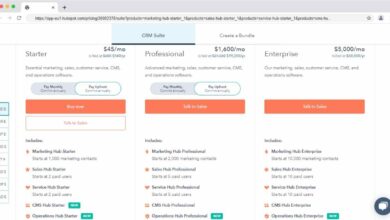
- Starter: $20/month (up to 1,000 contacts).
- Professional: $800/month (marketing, sales, service hubs).
- Enterprise: $3,200/month (advanced automation, reporting).
Unlike per-user models, HubSpot’s paid plans are tiered by features and contact volume, making it cost-effective for teams with many users but fewer contacts.
Zoho CRM: Budget-Friendly with Deep Feature Set
Zoho CRM is a favorite among small and mid-sized businesses for its balance of price and power.
- Free plan: Up to 3 users.
- Standard: $14/user/month (automation, web forms).
- Professional: $23/user/month (custom functions, forecasting).
- Enterprise: $40/user/month (territory management, audit trails).
Zoho also offers bundled suites (Zoho One) for $37/user/month, which includes 50+ apps—making it one of the best values for integrated business software.
Factors That Increase CRM Software Cost
Even if you choose a low-cost CRM, several factors can drive up your total expenditure over time.
Customization and Development Needs
Off-the-shelf CRM features may not fit your unique business processes. Custom workflows, fields, or dashboards often require developer time or third-party consultants.
- Simple customizations: $500–$2,000.
- Complex integrations or app development: $10,000–$50,000+.
- Low-code platforms (like Salesforce Lightning) reduce but don’t eliminate these costs.
Third-Party Integrations and Add-Ons
Most businesses need their CRM to connect with tools like email marketing, accounting software, or e-commerce platforms.
- Native integrations: Often free or included.
- Marketplace apps: $10–$500/month (e.g., Mailchimp, Shopify, Slack).
- Custom API development: $5,000–$20,000 depending on complexity.
For example, connecting Salesforce to an ERP system via MuleSoft can cost $15,000+ in setup and licensing.
Data Migration and Cleanup
Moving data from spreadsheets or legacy systems into a new CRM is more complex than it seems.
- Manual entry: Time-consuming and error-prone.
- Automated migration tools: $500–$5,000.
- Professional data cleanup services: $2,000–$20,000 (critical for large datasets).
Poor data quality can undermine CRM effectiveness, so investing in migration is often worth the CRM software cost.
How to Reduce CRM Software Cost Without Sacrificing Value
You don’t have to overspend to get a powerful CRM. Smart strategies can help you minimize costs while maximizing ROI.
Start with a Free or Low-Cost Plan
Many vendors offer free tiers that are surprisingly capable.
- HubSpot CRM Free: Full sales and service features.
- Zoho CRM Free: Great for solopreneurs and small teams.
- Insightly Free: Limited but functional for basic CRM needs.
Use the free version to test workflows, train your team, and gather requirements before upgrading.
Negotiate with Vendors and Leverage Annual Billing
Most CRM vendors are willing to negotiate, especially for annual commitments.
- Annual billing typically saves 10–20% over monthly payments.
- Ask for discounts for non-profits, startups, or educational institutions.
- Enterprise clients can negotiate custom pricing, bundled services, or waived setup fees.
For example, Salesforce often offers 15% discounts for annual contracts and additional credits for new customers.
Optimize User Licenses and Roles
Not every employee needs a full CRM license. Use role-based access to reduce costs.
- Assign full licenses only to sales reps and managers.
- Use read-only or limited-access licenses for support staff or executives.
- Regularly audit user activity to deactivate unused accounts.
Some platforms like Microsoft Dynamics 365 offer “team member” licenses for $65/user/month—much cheaper than full licenses.
Measuring ROI: Is Your CRM Software Cost Worth It?
The ultimate question isn’t just how much a CRM costs—but how much value it delivers.
Key Metrics to Track CRM ROI
To justify the CRM software cost, track measurable outcomes:
- Sales cycle length: Has it decreased since CRM implementation?
- Conversion rates: Are more leads turning into customers?
- Customer retention: Are repeat purchases or renewals increasing?
- Team productivity: Are reps spending less time on admin and more on selling?
A study by Nucleus Research found that CRM delivers an average ROI of $8.71 for every $1 spent.
Common Pitfalls That Kill CRM ROI
Even the best CRM can fail if not implemented correctly.
- Poor user adoption: If your team doesn’t use the CRM, it’s a wasted investment.
- Lack of training: Employees need ongoing support to use the system effectively.
- Over-customization: Too many tweaks can make the system slow and hard to upgrade.
- No data governance: Inaccurate or duplicate data reduces trust in the system.
According to Gartner, 40% of CRM projects fail due to lack of user adoption.
When to Upgrade or Switch CRM Platforms
Sticking with a CRM that no longer fits your needs can cost more in lost opportunities than switching.
- Upgrade when: You’re hitting user or data limits, lacking critical features, or experiencing performance issues.
- Switch when: The vendor lacks innovation, support is poor, or costs are spiraling without added value.
- Always plan migration during low-sales periods to minimize disruption.
Many companies successfully migrate from Zoho to Salesforce or HubSpot as they scale.
What is the average CRM software cost for a small business?
The average CRM software cost for a small business ranges from free to $50 per user per month. Free options like HubSpot CRM and Zoho CRM are popular, while paid plans from Insightly or Freshsales typically cost $12–$49/user/month. Implementation and training may add $1,000–$5,000 initially.
Does CRM software cost include implementation and training?
No, most CRM software cost quotes only include subscription fees. Implementation, data migration, customization, and training are often billed separately—especially for enterprise platforms like Salesforce or Microsoft Dynamics. These can add thousands to the total cost.
Can I negotiate CRM pricing with vendors?
Yes, CRM pricing is often negotiable. Vendors may offer discounts for annual billing, non-profits, or long-term contracts. Enterprise clients can negotiate custom pricing, waived setup fees, or bundled services. Always ask for a discount before signing.
Which CRM has the best value for money in 2024?
Zoho CRM and HubSpot offer the best value for money in 2024. Zoho provides deep functionality at low prices, especially with Zoho One. HubSpot’s free CRM is unmatched in features, and its paid tiers scale well for growing businesses. For enterprises, Salesforce remains the leader despite higher costs.
Are there any completely free CRM software options?
Yes, several CRM platforms offer free plans with robust features. HubSpot CRM, Zoho CRM (up to 3 users), and Insightly (2 users) are fully functional free options. They may limit advanced features or contact volume, but they’re excellent for startups and small teams.
Understanding CRM software cost is about more than just the monthly bill. It’s about evaluating total ownership cost, aligning features with business needs, and measuring long-term ROI. Whether you’re a solopreneur or a global enterprise, there’s a CRM solution that fits your budget—and with smart planning, you can maximize its value while minimizing expenses. The key is to start small, scale wisely, and always keep your business goals in focus.
Further Reading: