Thinking about adopting Salesforce CRM but confused by the pricing? You’re not alone. With multiple editions, add-ons, and hidden costs, Salesforce CRM pricing can feel like a maze. Let’s break it down—clearly, honestly, and completely.


Salesforce CRM Pricing Overview: What You Need to Know First

Salesforce CRM pricing isn’t a one-size-fits-all model. It’s a tiered, modular system designed to scale with your business. Whether you’re a startup or a multinational corporation, Salesforce offers different editions tailored to specific needs, each with its own cost structure. Understanding the basics is crucial before diving into the deeper details.
How Salesforce CRM Pricing Works
Salesforce operates on a subscription-based model, typically billed annually per user per month (UPM). The price you pay depends on the edition you choose, the number of users, and any additional features or cloud services you opt for. Unlike some competitors, Salesforce doesn’t offer a free plan, but it does provide a free trial to test the waters.
- Subscription is usually billed annually, though monthly options exist.
- Most plans require a minimum number of user licenses (often 5).
- Pricing varies significantly between editions—Salesforce Essentials, Professional, Enterprise, and Unlimited.
For the most accurate and up-to-date information, always refer to the official Salesforce CRM pricing page.
The Role of Editions in Salesforce CRM Pricing
Each Salesforce CRM edition unlocks a different level of functionality, and with that comes a different price tag. The more advanced the edition, the higher the cost—but also the greater the customization, automation, and support.
- Essentials: Entry-level, ideal for small businesses. Limited customization.
- Professional: Mid-tier, includes workflow automation and API access.
- Enterprise: Full customization, advanced reporting, and full API access.
- Unlimited: Premium support, additional storage, and 24/7 phone support.
“Salesforce isn’t just software—it’s a platform. And with that platform comes complexity in pricing.” — CRM Industry Analyst, 2023
Salesforce CRM Pricing by Edition: Breaking Down the Costs
To truly understand Salesforce CRM pricing, you need to look at each edition individually. The differences aren’t just in price—they’re in capabilities, scalability, and long-term value. Let’s dissect each one.
Salesforce Essentials: The Entry Point
Salesforce Essentials is the most affordable option, designed for small businesses with up to 10 users. It starts at $25 per user per month when billed annually. This edition includes basic CRM features like contact management, lead tracking, email integration, and a mobile app.
- Ideal for startups and solopreneurs.
- Limited customization and automation.
- No API access, which restricts third-party integrations.
While it’s the cheapest entry into the Salesforce ecosystem, Essentials lacks the depth needed for growing businesses. For more details, visit the Salesforce Sales Cloud pricing page.
Salesforce Professional: The Sweet Spot for SMBs
Priced at $75 per user per month, Salesforce Professional is where many small to mid-sized businesses find their sweet spot. It includes everything in Essentials plus workflow automation, custom reports, and API access—making it far more flexible.
- Enables automation of repetitive tasks (e.g., lead assignment).
- Supports integration with third-party apps via API.
- Allows for custom page layouts and fields.
This edition is often recommended for sales teams that need more than basic CRM functionality but aren’t ready for full-scale customization.
Salesforce Enterprise: For Scaling Organizations
At $150 per user per month, Salesforce Enterprise is a significant jump in cost—but also in capability. This edition is built for companies that need deep customization, advanced security, and complex automation.
- Full customization of objects, workflows, and processes.
- Advanced reporting and dashboarding tools.
- Full API access and sandbox environments for testing.
Enterprise is ideal for mid-sized to large companies with dedicated IT or admin teams. It’s also the minimum requirement for many Salesforce consultants and developers.
Salesforce Unlimited: The Premium Tier
The most expensive option, Salesforce Unlimited, costs $300 per user per month. It includes all Enterprise features plus premium support, additional storage, and access to Salesforce’s most advanced tools.
- 24/7 phone support with faster response times.
- Increased data and file storage limits.
- Additional sandboxes for development and testing.
- Access to Salesforce’s most advanced analytics and AI tools.
This edition is typically chosen by large enterprises with complex CRM needs and high service-level expectations.
Hidden Costs in Salesforce CRM Pricing You Can’t Ignore
The listed price per user is just the beginning. Many companies underestimate the total cost of ownership (TCO) because they don’t account for add-ons, implementation, and ongoing maintenance. Let’s uncover the hidden layers of Salesforce CRM pricing.
Add-Ons and Cloud Services: The Real Price Inflators
Salesforce offers a range of additional clouds and services that can dramatically increase your monthly bill. These are not included in the base CRM pricing but are often essential for full functionality.
- Service Cloud: Starts at $75/user/month—adds customer service and support features.
- Marketing Cloud: Starts at $400/month (minimum spend)—for email, social, and advertising automation.
- Commerce Cloud: Custom pricing—e-commerce and B2B storefronts.
- Pardot (B2B Marketing Automation): Starts at $1,250/month for up to 10,000 contacts.
These add-ons can quickly double or triple your initial investment. For example, combining Sales Cloud Enterprise with Service Cloud and Pardot can push costs well over $500 per user per month.
Implementation and Consulting Fees
Unlike simpler CRMs, Salesforce often requires professional implementation. This includes data migration, user training, workflow design, and system integration. These services are typically billed hourly or as a fixed project fee.
- Consulting rates range from $150 to $300 per hour.
- Small implementations can cost $10,000–$25,000.
- Large enterprise rollouts can exceed $100,000.
Many businesses fail to budget for this, leading to sticker shock after signing the subscription. Salesforce partners like Accenture, Deloitte, and smaller boutique firms offer these services.
Customization and Development Costs
If you need custom apps, workflows, or integrations, you’ll likely need a Salesforce developer. Whether hired in-house or outsourced, this adds to your ongoing expenses.
- Freelance developers charge $80–$150/hour.
- Full-time Salesforce admins earn $80,000–$120,000 annually.
- Custom app development on the Salesforce AppExchange can cost thousands.
These costs are often recurring, especially as your business evolves and new requirements emerge.
Salesforce CRM Pricing for Nonprofits and Education
Salesforce isn’t just for for-profit businesses. The company offers significant discounts through its Salesforce.org program for nonprofits, educational institutions, and NGOs.
Salesforce Nonprofit Cloud Pricing
Nonprofits can get Salesforce CRM at up to a 80–90% discount. For example, the Nonprofit Success Pack (NPSP) is available for free, and core CRM editions are heavily subsidized.
- Essentials: As low as $12/user/month.
- Professional: Around $37/user/month.
- Enterprise: Approximately $75/user/month.
To qualify, organizations must be registered 501(c)(3) nonprofits or equivalent. More information is available at Salesforce.org.
Education and Government Discounts
Educational institutions and government agencies also qualify for discounted pricing. Universities often use Salesforce for student recruitment, alumni relations, and donor management.
- Discounts vary by institution size and use case.
- Free training and certifications available through Trailhead.
- Special editions like Education Cloud and Health Cloud are available at reduced rates.
These programs reflect Salesforce’s commitment to social impact and community development.
How Salesforce CRM Pricing Compares to Competitors
To evaluate whether Salesforce CRM pricing is worth it, you need context. How does it stack up against other major CRM platforms?
Salesforce vs. HubSpot CRM
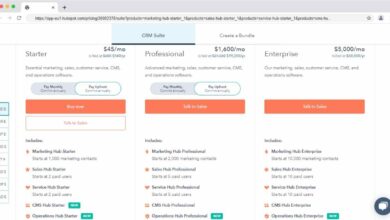
HubSpot offers a free CRM with robust features, making it a popular alternative. Paid plans start at $45/month for the Starter tier.
- HubSpot is easier to use and requires less setup.
- Salesforce offers far greater customization and scalability.
- HubSpot’s free plan includes email tracking, contact management, and deal pipelines.
For small teams, HubSpot may be more cost-effective. For complex sales processes, Salesforce wins on functionality.
Salesforce vs. Zoho CRM
Zoho CRM is another budget-friendly option, with plans starting at $14/user/month. It’s known for affordability and ease of use.
- Zoho offers AI-powered sales forecasting and automation at a fraction of Salesforce’s cost.
- Salesforce has a larger ecosystem, more integrations, and better enterprise support.
- Zoho is ideal for small businesses; Salesforce for scaling organizations.
While Zoho is cheaper, it lacks the depth and global support network of Salesforce.
Salesforce vs. Microsoft Dynamics 365
Dynamics 365 is a direct competitor, especially for enterprises already using Microsoft 365. Pricing starts at $65/user/month for Sales Professional.
- Better integration with Office 365 and Azure.
- Salesforce has a more intuitive UI and larger AppExchange marketplace.
- Dynamics may be cheaper for Microsoft-centric organizations.
The choice often comes down to ecosystem preference—Microsoft vs. Salesforce.
Negotiating Salesforce CRM Pricing: Can You Get a Better Deal?
Yes—you can negotiate Salesforce CRM pricing. Unlike many SaaS companies, Salesforce is open to discounts, especially for long-term contracts and larger deployments.
Strategies for Negotiating Lower Rates
Salesforce sales reps have some flexibility in pricing, especially when closing large deals. Here are proven tactics:
- Commit to a 2- or 3-year contract for a discount.
- Benchmark against competitors (e.g., HubSpot, Zoho).
- Ask for promotional pricing or bundled add-ons at reduced rates.
- Leverage nonprofit or education status if applicable.
Many customers report saving 10–25% with negotiation.
The Role of Salesforce Partners in Pricing
Salesforce partners (like implementation consultants) can also influence pricing. Some partners have discount agreements with Salesforce and can pass savings to clients.
- Partners may bundle services and software for a lower total cost.
- They can advise on the most cost-effective edition for your needs.
- Some partners offer financing or phased rollout plans.
Working with a trusted partner can save both money and time.
Is Salesforce CRM Pricing Worth It? A Value Analysis
The final question: Is Salesforce worth the cost? The answer depends on your business size, complexity, and long-term goals.
When Salesforce CRM Pricing Makes Sense
Salesforce is a strong investment if:
- You have a complex sales process with multiple stages.
- You need deep integration with other enterprise systems.
- You plan to scale rapidly and need a future-proof platform.
- You have (or can hire) a Salesforce admin or developer.
For these businesses, the ROI from improved sales efficiency, customer insights, and automation often justifies the cost.
When to Consider Alternatives
Salesforce may be overkill if:
- You’re a small team with simple CRM needs.
- You lack the budget for implementation and ongoing maintenance.
- You prefer a no-code, easy-to-use interface.
- You don’t need advanced customization or AI features.
In these cases, platforms like HubSpot, Zoho, or Freshsales might offer better value.
Total Cost of Ownership vs. Long-Term Benefits
While Salesforce CRM pricing is high upfront, the long-term benefits can outweigh the costs. Companies report:
- 30% increase in sales productivity.
- 25% improvement in lead conversion rates.
- Better customer retention through centralized data.
- Scalability without switching platforms.
The key is aligning the investment with your strategic goals.
What is the starting price for Salesforce CRM?
Salesforce CRM starts at $25 per user per month for the Essentials edition when billed annually. However, most businesses end up paying more due to required add-ons, implementation, and customization.
Is there a free version of Salesforce CRM?
No, Salesforce does not offer a free plan. However, it provides a free trial (usually 30 days) and heavily discounted pricing for nonprofits through Salesforce.org.
Can you negotiate Salesforce CRM pricing?
Yes, Salesforce pricing is negotiable, especially for multi-year contracts, large user counts, or nonprofit organizations. Working with a Salesforce partner can also help secure better rates.
What’s included in Salesforce Enterprise edition?
Salesforce Enterprise includes full customization, advanced reporting, API access, sandbox environments, and support for complex automation. It’s priced at $150 per user per month.
How much does Salesforce implementation cost?
Implementation costs vary widely. Small businesses may spend $10,000–$25,000, while large enterprises can spend over $100,000 depending on complexity, data migration, and customization needs.
In conclusion, Salesforce CRM pricing is complex but transparent once you understand the layers. From the entry-level Essentials at $25/user/month to the premium Unlimited edition at $300/user/month, the cost scales with functionality. Hidden expenses like add-ons, implementation, and customization can significantly increase the total investment. However, for businesses that need a powerful, scalable, and customizable CRM, Salesforce often delivers strong ROI. The key is to assess your real needs, negotiate wisely, and plan for the total cost of ownership—not just the sticker price.
Further Reading: