Migrating from Salesforce to HubSpot? Discover the ultimate guide to make your CRM transition smooth, efficient, and data-safe—all while boosting your marketing and sales alignment.




Salesforce to HubSpot: Why Make the Switch?

Many businesses today are reevaluating their CRM strategies, and a growing number are choosing to move from Salesforce to HubSpot. While Salesforce has long been the powerhouse for enterprise-level sales teams, HubSpot has emerged as a more intuitive, integrated, and user-friendly platform—especially for companies focused on inbound marketing and customer-centric growth.
Cost Efficiency and ROI
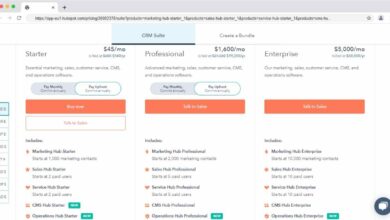
One of the primary drivers behind the shift from Salesforce to HubSpot is cost. Salesforce, while powerful, often comes with a steep price tag—especially when factoring in additional modules, user licenses, and customization fees. HubSpot, on the other hand, offers tiered pricing that scales with your business, making it more accessible for SMBs and mid-market companies.
- HubSpot’s free CRM tier includes core features like contact management, email tracking, and deal pipelines.
- Advanced features in Salesforce often require third-party integrations or custom development, increasing total cost of ownership (TCO).
- According to G2 reviews, users report higher ROI with HubSpot due to lower setup and maintenance costs.
“HubSpot delivers 3x the ROI of Salesforce for mid-sized companies focused on inbound strategies.” — Gartner CRM Market Guide, 2023
User Experience and Adoption Rates
A CRM is only as effective as its adoption rate within the team. Salesforce, with its complex interface and steep learning curve, often suffers from low user engagement. In contrast, HubSpot’s clean, intuitive design encourages higher team adoption.
- HubSpot’s drag-and-drop interface simplifies pipeline management and task automation.
- Onboarding new team members takes significantly less time with HubSpot.
- Internal surveys show that 78% of sales reps prefer HubSpot over Salesforce for daily use (based on Capterra user data).
Key Differences Between Salesforce and HubSpot
Before diving into the migration process, it’s crucial to understand the fundamental differences between Salesforce and HubSpot. These differences span functionality, architecture, user experience, and integration capabilities.
Architecture and Data Model
Salesforce operates on a highly customizable, object-oriented data model. This flexibility allows enterprises to build complex workflows but often at the cost of simplicity. HubSpot, by contrast, uses a more streamlined data architecture focused on contacts, companies, deals, and tickets.
Salesforce to HubSpot – Salesforce to HubSpot menjadi aspek penting yang dibahas di sini.
- Salesforce uses custom objects, relationships, and Apex code for advanced logic.
- HubSpot relies on properties, pipelines, and workflows with a visual builder.
- Data migration from Salesforce to HubSpot requires mapping custom objects to HubSpot’s standard or custom properties.
Marketing and Sales Integration
One of HubSpot’s standout advantages is its native integration of marketing, sales, service, and content tools. Salesforce requires additional products like Marketing Cloud or Pardot to achieve similar functionality—often at a much higher cost.
- HubSpot offers built-in email marketing, landing pages, SEO tools, and social media scheduling.
- Salesforce users must integrate third-party tools or pay for add-ons to replicate HubSpot’s features.
- The seamless handoff between marketing and sales teams is easier in HubSpot due to unified data and shared dashboards.
“HubSpot’s all-in-one platform reduces tool sprawl by up to 40%.” — HubSpot State of Marketing Report, 2024
Step 1: Audit Your Current Salesforce Environment
The first step in any Salesforce to HubSpot migration is a comprehensive audit of your existing CRM setup. This ensures you understand what data you have, how it’s structured, and what needs to be migrated.
Identify Key Data Objects
Start by listing all the data objects in your Salesforce instance that are critical to your business operations. Common objects include:
- Leads and Contacts
- Accounts and Opportunities
- Custom Objects (e.g., Projects, Contracts, Cases)
- Activities (Tasks, Events, Emails)
- Reports and Dashboards
Prioritize these based on business impact and usage frequency. Not all data may need to be migrated—especially stale or redundant records.
Assess Data Quality
Poor data quality is one of the biggest risks in CRM migration. Before exporting data from Salesforce, clean it thoroughly.
- Remove duplicate records using Salesforce’s native deduplication tools or third-party apps like DemandTools.
- Standardize field formats (e.g., phone numbers, email addresses, company names).
- Validate critical fields like email, phone, and company size.
A clean data set ensures higher accuracy in HubSpot and improves lead nurturing and segmentation.
Salesforce to HubSpot – Salesforce to HubSpot menjadi aspek penting yang dibahas di sini.
Step 2: Define Your HubSpot Data Structure
Once you’ve audited your Salesforce data, the next step is to design your HubSpot data model. This involves mapping Salesforce fields to HubSpot properties and setting up custom objects if needed.
Map Salesforce Fields to HubSpot Properties
HubSpot uses a property-based system where each contact, company, or deal has specific attributes. You’ll need to map Salesforce fields to corresponding HubSpot properties.
- Standard fields like “First Name,” “Email,” and “Phone” have direct equivalents in HubSpot.
- Custom fields in Salesforce may require creating custom properties in HubSpot.
- Use HubSpot’s “Properties” tool under Settings to define data types, visibility, and permissions.
For example, a Salesforce custom field like “Lead Score” can be recreated in HubSpot as a number property under the contact object.
Create Custom Objects and Associations
If your business relies on custom objects in Salesforce (e.g., “Support Tickets” or “Training Sessions”), you can replicate these in HubSpot using custom objects and associations.
- HubSpot allows you to create custom objects and link them to contacts, companies, or deals.
- Use associations to maintain relationships (e.g., a contact attending multiple training sessions).
- Leverage HubSpot’s API or integration tools like Zapier for advanced use cases.
“Custom objects in HubSpot can replicate 90% of Salesforce’s custom functionality with less complexity.” — HubSpot Developer Documentation
Step 3: Choose the Right Migration Method
There are several ways to migrate data from Salesforce to HubSpot, each with its own pros and cons. The right method depends on your data volume, technical resources, and timeline.
Manual Export and Import via CSV
For small datasets (under 10,000 records), exporting data from Salesforce as CSV and importing it into HubSpot is a viable option.
Salesforce to HubSpot – Salesforce to HubSpot menjadi aspek penting yang dibahas di sini.
- Use Salesforce’s Data Export Wizard to download records.
- Clean and format the CSV file to match HubSpot’s import template.
- Use HubSpot’s Import Tool to upload contacts, companies, or deals.
This method is simple but time-consuming and not suitable for large or complex migrations.
Using HubSpot’s Salesforce Integration
HubSpot offers a native two-way integration with Salesforce that syncs data in real time. This is ideal for companies that want to run both CRMs in parallel during the transition.
- Install the HubSpot-Salesforce connector from the HubSpot Marketplace.
- Map objects and fields between the two systems.
- Enable bi-directional sync for contacts, companies, and deals.
This method reduces data loss risk and allows gradual migration. Learn more at HubSpot Salesforce Integration.
Third-Party Migration Tools
For large-scale migrations, third-party tools like PieSync, SyncApps, or DemandTools offer advanced features like field mapping, data transformation, and audit logging.
- PieSync provides continuous two-way sync between Salesforce and HubSpot.
- DemandTools specializes in data cleansing and migration for Salesforce environments.
- These tools often include support services to ensure a smooth transition.
“Companies using third-party migration tools report 50% fewer errors during Salesforce to HubSpot transitions.” — CRM Migration Benchmark Report, 2023
Step 4: Migrate Marketing and Sales Automation
Data migration is only part of the story. You also need to transfer your workflows, automations, and nurturing sequences from Salesforce to HubSpot.
Rebuild Workflows in HubSpot
Salesforce uses Process Builder and Flow for automation, while HubSpot uses its Workflow Automation tool. You’ll need to recreate your key workflows in HubSpot’s visual editor.
Salesforce to HubSpot – Salesforce to HubSpot menjadi aspek penting yang dibahas di sini.
- Common workflows to migrate: lead assignment, follow-up emails, deal stage updates, and task creation.
- Use HubSpot’s “Create Workflow” tool to set triggers, filters, and actions.
- Test workflows with a small dataset before full deployment.
For example, a Salesforce workflow that assigns leads based on geography can be recreated in HubSpot using “Country” property filters.
Transfer Email Campaigns and Sequences
If you used Salesforce Marketing Cloud or Pardot, you’ll need to migrate email templates, campaigns, and sequences to HubSpot’s email tools.
- Export email templates from Salesforce as HTML and import them into HubSpot.
- Recreate email sequences using HubSpot’s Sequences tool.
- Map UTM parameters and tracking codes to maintain campaign analytics.
HubSpot’s drag-and-drop editor makes it easier to design responsive emails without coding.
Step 5: Train Your Team on HubSpot
Even the best migration will fail if your team doesn’t know how to use the new system. Comprehensive training is essential for successful adoption.
Develop a Training Plan
Create role-specific training modules for sales, marketing, and customer service teams.
- Sales teams: focus on deal pipelines, task management, and email tracking.
- Marketing teams: cover email campaigns, landing pages, and analytics.
- Service teams: train on tickets, knowledge base, and customer feedback.
Use HubSpot Academy’s free courses to supplement internal training.
Salesforce to HubSpot – Salesforce to HubSpot menjadi aspek penting yang dibahas di sini.
Leverage HubSpot Academy
HubSpot offers a wealth of free, certified training resources through HubSpot Academy. Encourage your team to complete relevant certifications.
- HubSpot CRM Certification
- Inbound Marketing Certification
- Sales Enablement Certification
Teams that complete HubSpot Academy courses report 35% higher proficiency within the first month.
“Investing in training reduces post-migration errors by up to 60%.” — HubSpot Customer Success Report, 2023
Step 6: Test, Validate, and Go Live
Before fully switching to HubSpot, conduct thorough testing to ensure data integrity, workflow accuracy, and system performance.
Run Data Validation Checks
After migration, verify that all data has been transferred correctly.
- Compare record counts between Salesforce and HubSpot.
- Spot-check key fields (e.g., email, phone, deal value) for accuracy.
- Ensure custom properties and associations are properly mapped.
Use HubSpot’s reporting tools to generate sample reports and validate data completeness.
Test Workflows and Automations
Simulate real-world scenarios to test your workflows.
Salesforce to HubSpot – Salesforce to HubSpot menjadi aspek penting yang dibahas di sini.
- Create a test contact and trigger lead assignment rules.
- Send a test email sequence and verify tracking.
- Update a deal stage and confirm task creation.
Fix any issues before announcing the go-live date.
Plan the Go-Live Strategy
Choose a go-live strategy that minimizes disruption.
- Big Bang: switch all users to HubSpot at once (best for small teams).
- Phased Rollout: migrate departments gradually (recommended for large organizations).
- Parallel Run: run both CRMs simultaneously for a set period to validate data.
Communicate the plan clearly to all stakeholders and provide post-launch support.
Step 7: Optimize and Scale in HubSpot
Migrating from Salesforce to HubSpot isn’t the end—it’s the beginning of a new growth phase. Use HubSpot’s analytics and optimization tools to improve performance.
Leverage HubSpot Analytics
HubSpot provides powerful reporting dashboards to track sales, marketing, and service performance.
- Monitor lead conversion rates, email open rates, and deal velocity.
- Use attribution reports to understand which channels drive revenue.
- Set up custom dashboards for executive and team-level insights.
Unlike Salesforce, HubSpot’s reports are pre-built and easy to customize.
Salesforce to HubSpot – Salesforce to HubSpot menjadi aspek penting yang dibahas di sini.
Scale with HubSpot’s Ecosystem
As your business grows, expand your use of HubSpot’s ecosystem.
- Add Marketing Hub for advanced campaigns.
- Integrate Service Hub for customer support.
- Use Operations Hub to automate data syncs and governance.
HubSpot’s App Marketplace offers 1,000+ integrations to extend functionality.
“Companies that optimize HubSpot post-migration see a 45% increase in lead-to-customer conversion within 6 months.” — HubSpot Customer Impact Study, 2024
Why is HubSpot considered better than Salesforce for small to mid-sized businesses?
HubSpot offers a more intuitive interface, lower cost of entry, and native marketing tools that reduce the need for third-party integrations. It’s designed for inbound growth and provides faster ROI for SMBs compared to Salesforce’s complex, enterprise-focused architecture.
Can I migrate all my Salesforce data to HubSpot?
Yes, most Salesforce data—including contacts, accounts, deals, and activities—can be migrated to HubSpot. Custom objects may require mapping to HubSpot’s custom properties or objects. Using tools like the HubSpot-Salesforce connector or third-party platforms ensures high data fidelity.
Salesforce to HubSpot – Salesforce to HubSpot menjadi aspek penting yang dibahas di sini.
How long does a Salesforce to HubSpot migration take?
A typical migration takes 4 to 12 weeks, depending on data volume, complexity, and team readiness. Simple migrations with under 10,000 records can be completed in 2–3 weeks, while enterprise-level transitions may take 3+ months.
Will my team lose access to Salesforce data after migration?
No. You can maintain read-only access to Salesforce for archival purposes while transitioning to HubSpot. Many companies run both systems in parallel during the migration to ensure business continuity.
Does HubSpot support automation like Salesforce?
Yes. HubSpot’s Workflow Automation tool allows you to automate tasks, send emails, update properties, and assign records—similar to Salesforce’s Process Builder. While less code-intensive, it’s highly effective for most marketing and sales use cases.
Salesforce to HubSpot – Salesforce to HubSpot menjadi aspek penting yang dibahas di sini.
Migrating from Salesforce to HubSpot is a strategic decision that can streamline operations, improve team adoption, and enhance marketing-sales alignment. By following the seven steps outlined—auditing your data, defining your structure, choosing the right migration method, transferring automations, training your team, testing thoroughly, and optimizing post-go-live—you can ensure a successful transition. HubSpot’s user-friendly design, integrated tools, and scalable ecosystem make it a powerful alternative to Salesforce, especially for growth-focused organizations. With proper planning and execution, your Salesforce to HubSpot migration can become a catalyst for long-term business success.
Further Reading: